The Dispatch | Expert | Scudo Hub
Get help & share your Citroen Dispatch (Jumpy) | Peugeot Expert | Fiat Scudo tips
You are not logged in.
- Topics: Active | Unanswered
#601 Re: General Discussion » Split Charge People » 2016-07-01 15:46:33
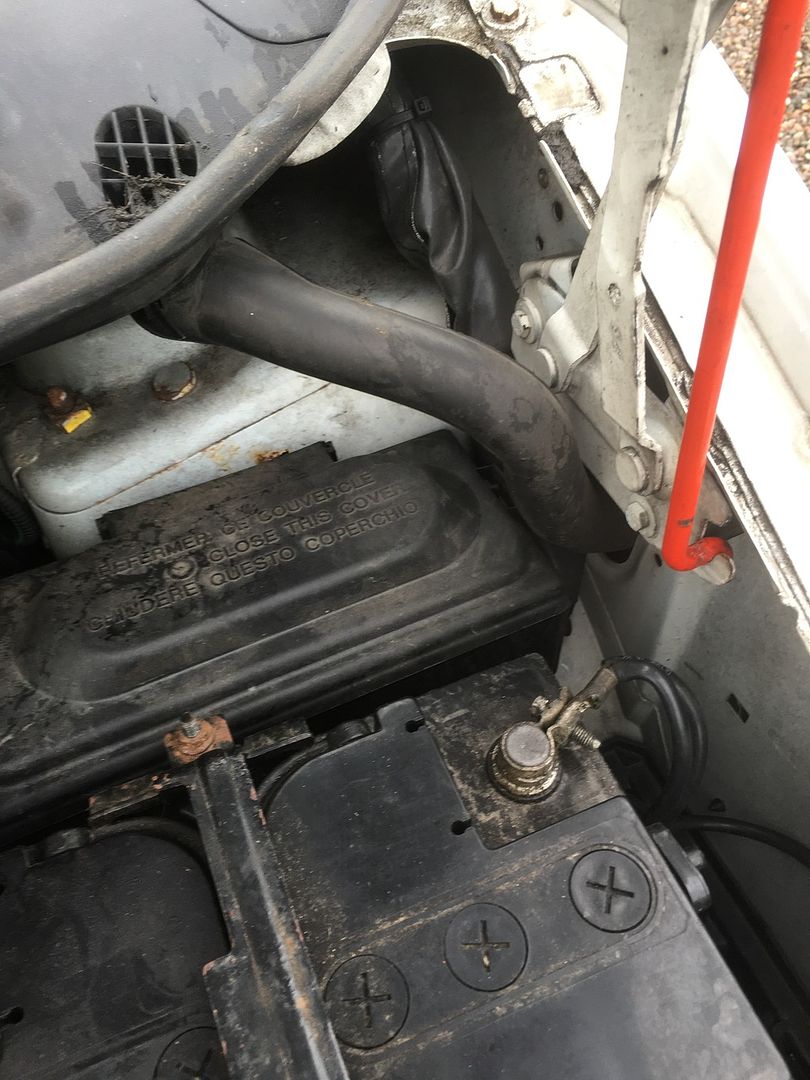
Bit tricky to see, but here's where I went through on the passenger side. 
#602 Re: Camper Conversions » Peugeot Expert WAV Conversion » 2016-06-30 18:01:26
Sorry I meant the in the campsites rather than the population.
I don't know when they started charging but its pretty much unavoidable as opposed to France
#603 Re: Camper Conversions » Peugeot Expert WAV Conversion » 2016-06-30 16:37:07
Casper, I've only been to the north in the van - Dolomites, Lakes, Verona, Venice & Trieste.
As you say the people are friendly and willing to help - it's just that in the middle of summer the campsites get jam packed and noisy - not our thing. We had some friends spend a few weeks on the Croatian coast and it was the same there.
#604 Re: Camper Conversions » Peugeot Expert WAV Conversion » 2016-06-30 11:52:24
Personally I would skip Italy - campsites get very crowded in July & August. The Italians tend to very loud and seem to lack the notion of personal space found elsewhere. Fuel is probably the most expsensive in Europe, and they charge for the motorways, with 50km speeds on the surrounding roads.
If you do go though Austria, bear in mind that the there are a few other roads that charge on top of the vignette http://www.tolls.eu/austria
I assume that you have the 1.9D 70hp engine also - be careful on the motorways, some of the contenental truckers are very unforgiving if they think that you are slowing them down. Also the German autobahn sliproads can be very short - and the Germans won't slow down to let you in.
Three will cover France, Italy and Spain, but speed can be variable. This year I've been using TescoMobile - £15 for 4GB data and 270 mins calls for 1 month. Speeds are great and coverage is for the whole of the EU.
Obviously campsites will get more crowded in summer, but its mainly familes - so we try to avoid the sites with pools & extras. The less stars the better - and it will be cheaper. Sites on a lake (especially Germany) or by the coast will be expensive and crowded.
You will have a great time - oh if you haven't done so already, before leaving get a few days away fully kitted up. It's surprising what turns up in the wash.
#605 Re: Camper Conversions » Peugeot Expert WAV Conversion » 2016-06-08 12:13:42
That was my thinking also - the fuel tank filler takes up a bit of room on the passenger side and the extra room on the other side effectively gives 100mm extra armroom in bed.
Over time the way we use the van has changed, and we find that we only ever turn the drivers seat. That being the case I'd say that putting the units right up to the back of the drivers seat would have been a better option, since the passenger seat can be pushed back further when turned. Would have given the missus a bit more legroom too 
#606 Re: Camper Conversions » battery Relay » 2016-06-07 19:19:57
Yes, that's right
#607 Re: Camper Conversions » battery Relay » 2016-06-07 16:57:02
No it shouldn't damage anything.
I wondered if it might give starting problems if the leisure battery was discharged, but my head started to hurt.
#608 Re: Camper Conversions » battery Relay » 2016-06-07 16:09:07
Will probably just blow the fuses between the batterys when starting.
#609 Re: Camper Conversions » battery Relay » 2016-06-06 19:55:27
If you are triggering the relay from the ignition then you will be starting the engine with the liesure battery as well as the main battery?
#610 Re: Camper Conversions » battery Relay » 2016-06-06 16:15:13
On my 2002 1.9D there is a "engine running" relay, which is fed from the the ECU via F6 (immobiliser fuse).
Used a tap/piggy back fuse holder to feed the split relay. That way you don't have to touch the alternator wire, which may not be happy driving a relay.
Getting wires from the engine bay to the interior is very difficult because its impossible to get a drill anywhere near the bulkhead. However there is a single hole with grommet - follow a straight line roughly from the battery earth terminal, towards the windscreen, all the way back. You will need to poke a hole through the insulation on the other side - I think I used a coat hanger.
#611 Re: Camper Conversions » Peugeot Expert WAV Conversion » 2016-05-13 10:49:26
Have been meaning to update the build log with the winters work, but here's the short story
Mixed results. I didn't seem to be getting the full 100W, rather half that @3A in full summer sun - but I suspect that this is a measurement problem with my meter, which after mods was showing 4A in yesterdays sun.
The panel is mainly used to power the fridge, however once the battery dropped below 12V, it would stop working due to the voltage drop at startup. So that meant it would only work for 2 nights using about 25% of the battery capacity. Increasing the wire size and providing a local ground will hopefully fix that and allow me to use 50% of the battery.
However the main issue, that none of the manufacturers will tell you about, is that any kind of shadow on the panel will kill your output voltage. So on my panel covering an area as small as 5cm x 5cm, will stop the battery charging. So with the roofbox in place, and the panel on the rear of the roof, its almost impossible to get a full days charge. So for this year I've moved the panel to the roofbox.
After saying all that, although it was not as good as I had hoped, it was great to be able to park up and go out all day without having to worry about what might be happening with the fridge. On other thing was that we went away for 10weeks over the winter, and left the van outside - with the battery connected. Since the solar controller also trickle charges the main battery, the van started instantly when we returned.
#612 Re: General Discussion » Sliding Door Security » 2016-05-09 14:23:11
Nice little addition.
Part number is 9046.36
#613 Re: Camper Conversions » Legal stuff » 2016-05-03 13:21:00
tee_cee wrote:Who were you traveling with?
We've traveled with DFDS.......Dover///Calais/Dunkirk
With the van we've always used P&O at Dover, and Stena for Liverpool-Belfast without issues at checkin.
Have used DFDS in the past and found them cheap but very unprofessional.
#614 Re: Camper Conversions » Legal stuff » 2016-05-02 17:23:32
tee_cee wrote:The risk is that they could treat it as a van or motorhome, which will be more expensive but I was ready to argue the point on the basis that the body is the same as the 806.
That was/is my argument that I had back I think last Oct/Sept when we popped over for a few days, I had "if it's converted to camper then it needs to be booked as one"
My answer to that was... As my partner is (One) disabled we have what is effectively a disability adapted vehicle
(Two).... She is in remission and gets weak/tired easily , so therefore she needs to rest/recover hence this vehicle as is.....Personally I feel/experienced that when you get to the booking gate as long as vehicle looks close to what it's booked as you should be fine....IE 2.35M x 6M does us fine but don't just arrive with a huge motor-home booked as a standard car
I believe our Dispatch comes under "Vehicle type approval N1"...... which makes it a van or van derived...... hence road tax not by emissions .... yet it's not recognized by LEZ and can enter London without penalty ?
Who were you traveling with?
#615 Re: Camper Conversions » Legal stuff » 2016-05-01 11:13:01
Oddly according to the DVLA, the "body type" e.g. motor caravan, only defines what the vehicle looks like, and not what it is necessarily used for. The "taxation class" e.g PLG defines how it is being used. However for motor caravans under 3t, they also confirm that PLG is the correct taxation class!
With the ferry company, I think that they just want to make sure that the vehicle is not a commercial van, so side windows and general camper layout should be enough. The risk is that they could treat it as a van or motorhome, which will be more expensive but I was ready to argue the point on the basis that the body is the same as the 806.
#616 Re: Camper Conversions » Legal stuff » 2016-04-30 10:13:10
Van insurance is a different beast with its own ncd. When I tried to get insurance online I kept getting redirected to van insurance, which without any ncd was going to be expensive. Went with Tesco who did not charge any extra for WAV vehicles on their car policies.
Re-registering meant that I had to switch over to a motorhome policy, which came out cheaper again.
#617 Re: Camper Conversions » Legal stuff » 2016-04-29 17:14:47
Thanks Tiree for encouraging my laziness as the book is in the bedroom some 20 steps away.

Away back to P&O now to see if that makes a difference.
With my online bookings, P&O Dover usually take a £5 deposit, rather than the whole amount.
#618 Re: Camper Conversions » Legal stuff » 2016-04-29 15:03:41
It's a legal responsibility to keep your V5 up to date - hence the reminder. Given that you have to jump through hoops to get it reclassified, I'd say it would be very easy to get rejected, if this is what you wanted to do. tbh I doubt if anyone cares.
Regarding the ferry, I've always booked as a high car/mpv rather than a van or motorhome. They usually have a peek over my shoulder when checking in, but have never asked any further questions.
As for insurance, the main thing is to always tell them that the van has been modded.
#619 Re: Maintenance » Front door security - Expert 1.9d 2002 » 2016-04-15 17:33:26
I ended up fitting a switch to the side and the rear doors, to disable the central locking when needed.
In addition I found some sash jammers that were a good fit for the front doors

#620 Re: General Discussion » 12v coolbox as a fridge? » 2016-04-08 17:16:48
Have used these coolboxes in the past, and they ok for keeping cold things cold. The main issue is that they typically continuously draw 4 or 5 amps, which is fine when the engine is running but will drain the battery very quickly when the engine is off. Also the cheaper ones will only drop the temperature 15 deg below ambient - so in summer when the inside of the van can easily be 35 deg - the coolbox will only be as low as 20 deg. Used in conjunction with freezer blocks they are still workable, though.
You can also spend a bit more and get a Waeco Tropicool. Its the same tech but they have engineered the boxes a bit more to increase the temperature differential to 30 deg, and include some temp control to reduce power consumption (a bit)
#621 Re: Maintenance » Leaking windscreen??? » 2016-04-08 16:34:05
http://i579.photobucket.com/albums/ss24 … 20Copy.jpg
First the 2 'drain hoses', have checked and both of these are clearhttp://i579.photobucket.com/albums/ss24 … 20Copy.jpg
There are 3 of these 'covers' and they lead somewhere but dont know where, could this be the problem?
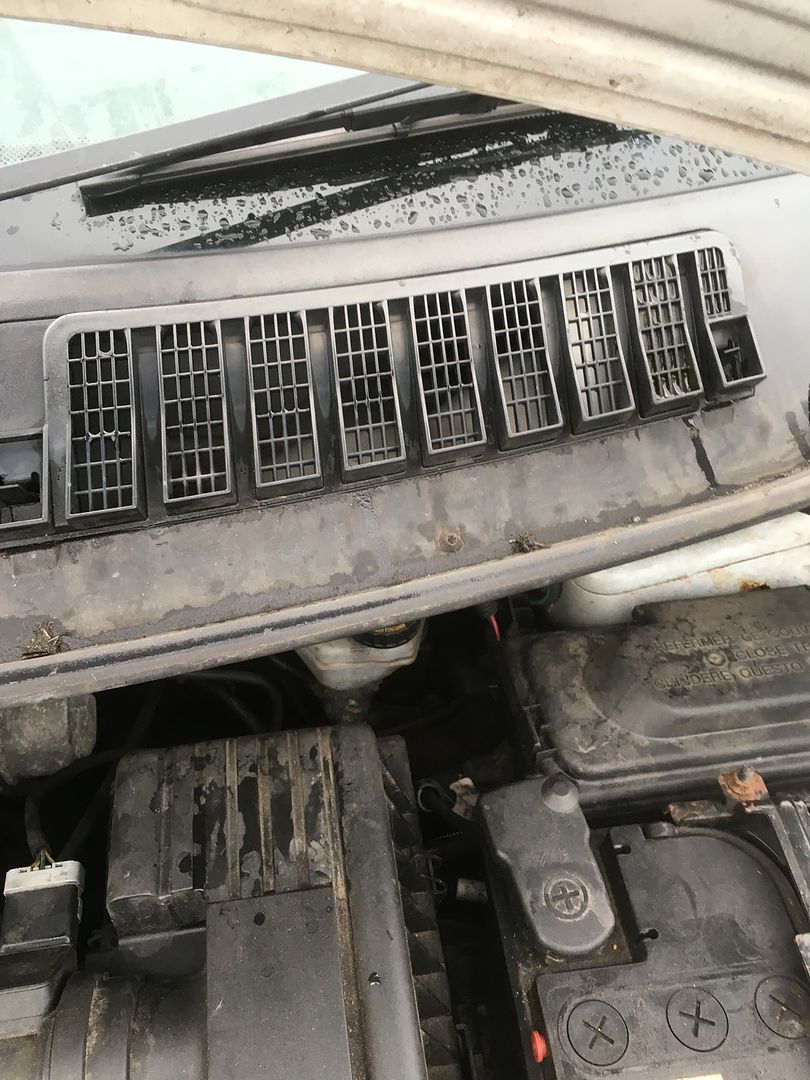
Lift the cover out and stick your hand in to the right, and there is another drain hole. It it should be dry, but if it is blocked then there will be water lying there. The other end of the rubber pipe is flat, so it does not take a lot to block it up.
I found this out last winter, when I lifted the front rubber floor, and found water - a lot of water. Had to get a dehumidifier, and run it for a week with the rubber lifted off the floor.
#622 Re: General Discussion » butane or propane?? » 2016-04-02 11:43:32
It does work as vaz has done but yes i agree. I am juat taking a camping stove and a couple of the small gas canisters and a quick visit to go outdoors for an hookup extension for my electric oven and grill. Having said that my next van will be a Transit or the likes and i will be sticking a sink and cooker in for the sake of getting the tax class changed but no more than two rings and i will no doubt only ever boil a kettle on it.
I re-registered the Expert as a motor caravan, with the single ring induction hob, and a toaster oven. No need for gas appliances.
#623 Re: General Discussion » butane or propane?? » 2016-04-01 13:46:15
If you are staying in campsites, then electric is a good option, especially given the size constraints in the van.
We have used all sorts of methods, but I have to say that the single ring induction hob has been the easiest to use.
For backup the £10 aerosol type cooker works fine and refills are easy to get. Also handy is are the resealable Coleman type canisters with a small ring (like msr pocket rocket) - when you just want to boil a kettle.
In the past we have used campingaz 2 ring burner with a 907, and it lasted for months -so we switched to a 904. But tbh I found the whole thing a bit bulky. Using the BBQ is another way to save on gas.
In a van this size, personally I don't really want to be cooking inside, so this has a large bearing on what systems to use. I've seen examples of small van conversions with built in gas rings, which to me, just seems impractical.
#624 Re: Maintenance » Front door security - Expert 1.9d 2002 » 2016-03-29 15:20:43
Funny enough yesterday I discovered that the side door wasn't actually locking. Turns out that the little plastic linkage from the central locking motor had disintegrated. Who knows how long it's been like that.
With the door panel off, it got me thinking about the security issue again, when I realised that all I needed was a switch on the door that disconnected the power to the central locking motor.
This can be handy to use when someone else has the van, like airport parking or when in the garage - to stop people opening and then slamming the sliding door! Usually I just put a bit of electrical tape over the door contacts.
#625 Re: Camper Conversions » Peugeot Expert WAV Conversion » 2016-03-29 12:23:23
Yes, the back of mine is rusting as well. I just scraped as much of the rust off as I could, filled in the holes, painted with some rust inhibitor and hammerite. I'll need to do the same again this year - so its a bit of a losing battle, but maybe it helps to slow the process a bit. When I lifted the ramp floor, I could see that water had been getting trapped and the metal floor was starting to rust.
In the end I had to put a floor down, due to the the fixing points on the bed being narrower than the ramp well.